Political situation
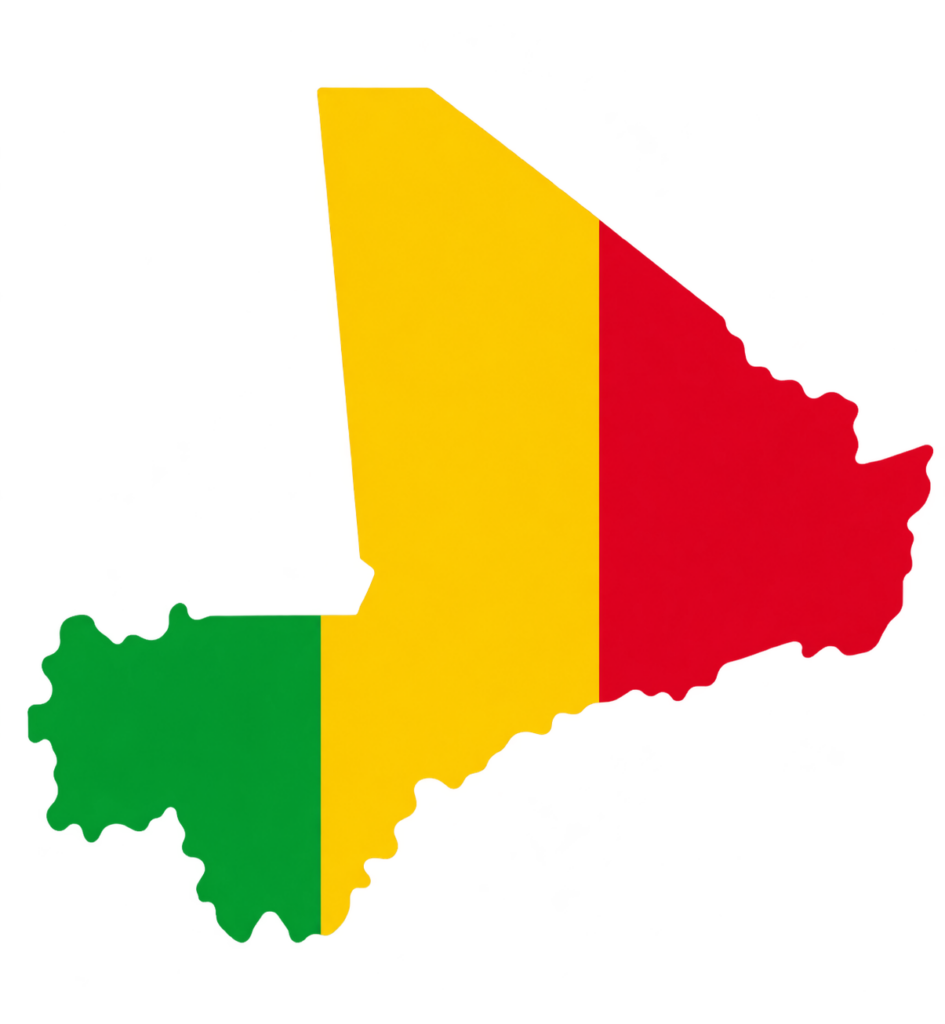
Regarded as one of West Africa’s promising democracies, Mali suffered a major political setback in 2012, starting with the prolonged Tuareg rebellion and culminating in the military coup of 22 March 2012 that overthrew the elected Government of former President Amadou Toumani Touré. The coup precipitated the military victory of the Tuareg rebellion declared by the National Movement for the Liberation of Azawad (MNLA), with the open support of terrorist groups linked to Al-Qaeda, mainly Ansar Dine, the Movement for Oneness and Jihad in West Africa (MUJAO) and Al-Qaeda in the Islamic Maghreb (AQIM).
The eventual fall of the vast northern region of the country into the hands of rebels and terrorists, and the subsequent imposition of Sharia in the region, led to the de facto division of the country in two. In April 2012, the MNLA unilaterally declared the «Independence of Azawad» following a major lightning offensive in the north of the country, and took control of three key towns: Kidal, Gao and Timbuktu. This dramatic situation displaced hundreds of thousands of Malians to neighbouring countries.
Moreover, control of the north by terrorist groups, which were also engaged in organised crime such as kidnapping, drug trafficking and smuggling, turned the country into a haven for ML/TF. While the Interim Government in Bamako struggled to organise itself, the threatening advance of terrorist forces towards the south, together with the overall political oversight still exercised by the coup leaders, continued to undermine the authority of the Malian State.
Following the forced resignation of former Prime Minister Cheick Modibo Diarra in December 2012 and his arrest on the orders of Captain Sanogo, the coup leader, a new Prime Minister, Dr Diango Cissoko, was appointed. Yet the combination of a terrorist-held territory in the north and a military-controlled civilian government in the south is deeply damaging to Mali’s ability to combat ML/TF. Worse still, it has turned the country into fertile ground for plotting and promoting TF, organised crime and other ML predicate offences in neighbouring countries of the region.
It is important to note, however, that ECOWAS responded appropriately to the challenges posed by the political and security situation in Mali. ECOWAS, in collaboration with the United Nations and the African Union (AU), secured the adoption of a Security Council Resolution for the deployment of troops to Mali under what became known as AFISMA. A donors’ pledging conference was also held, raising about USD 450 million as well as other subsequent assistance. French and Malian forces succeeded in dislodging the rebels and freeing significant parts of Malian territory before the end of 2012. Most ECOWAS countries and others deployed troops to help restore Mali’s sovereignty. At the time of writing, negotiations were under way through constructive dialogue and a consensual electoral timetable.
Economic and financial situation
Despite the political and security crises, Mali’s economy was forecast to grow by 6.9% in 2012, an increase of 1.1% compared with 2011. This estimate is, however, subject to change depending on developments in the political and security situation and on trade with Côte d’Ivoire.
Mali’s macroeconomic context had already been marked in 2011 by a sharp fall in agricultural output owing to erratic rainfall and its poor distribution over time and space. This was compounded by a combination of external shocks, including the post-election crisis in Côte d’Ivoire, the war in Libya, and rising oil and food prices. In 2011, national GDP grew by 1.1%, with the primary, secondary and tertiary sectors contributing 35.1%, 25.3% and 39.5% respectively. GDP growth was supported first by cotton production and trade, and then by the textile and food industries, transport, telecommunications and livestock farming.
Mali’s financial sector is dominated by banks, with 13 deposit money banks accounting for about 90% of the sector’s total assets, valued at about 20% of GDP in 2010. Remittances in 2011 amounted to USD 473 million, or about 4.5% of GDP.
Following the March 2012 coup, both the public and private sectors of the economy suffered considerable damage. The occupation of the north disrupted agricultural production and trade, as the sharply deteriorating security situation led to a fall in business travel to Mali. Trade in general, as well as hotels and restaurants, suffered greatly. The decision by development partners to suspend budget support and much of the project aid to the local administration resulted in weak performance in the construction and public works sectors. Fortunately, the mining sector proved to be a stable source of growth, and the agricultural sector enjoyed abundant harvests in 2012.
The IMF considers that the authorities acted prudently by offsetting the loss of revenue through spending cuts, particularly in capital expenditure, and by reducing indirect subsidies on petroleum products and cooking gas. In addition, at the end of July 2012, the World Bank had a portfolio of eighteen active projects in Mali, with financing commitments of USD 587.6 million spread across energy and rural development.
Mali was ranked 146th out of 183 countries in the World Bank’s 2012 Doing Business report and, as such, was considered the country that had carried out the most reforms in the WAEMU zone to improve the business climate. However, its ranking by Transparency International at 105th out of 174 countries on the 2012 Corruption Perceptions Index remained poor, with a score of 34%, reflecting the level of corruption in the country. In such a climate, it would be very difficult to make the national AML/CFT regime work effectively.
Despite the country’s economic progress in 2012, poverty persisted in Mali, particularly in rural areas (51%). The UNDP rated the country low on human development (175th out of 185 countries in 2011), compounded by unfavourable demographics (a high fertility rate of 6.6 children per woman; a very young population, with 3 out of 5 Malians under 25). This could make social spending unsustainable for the government in the medium and long term.
Youth unemployment is a major problem in Mali (15.4% for the 15 to 39 age group, compared with 9.6% for the population as a whole), and it is more prevalent in Bamako (27.3%) than in secondary towns (14%) and rural areas (6.6%). Rural areas mainly struggle with underemployment during the dry season. The average duration of unemployment is five years, and the vast majority of the unemployed (81.5%) are young people looking for their first job.
On the other hand, Mali is on track to achieve the Millennium Development Goal (MDG) on primary school enrolment by 2015. The literacy rate is much higher in urban areas (53.2%) than in rural areas (21.6%). In terms of social spending, 35.61% of the 2011 budget was devoted to education. Mali could also achieve the MDG on combating HIV/AIDS by 2015. Discrimination against women and inequality remain strongly present in Mali. Women are still under-represented in decision-making bodies.
Prevalence of predicate offences
Historically, the country’s geographical position placed it on the caravan trade routes that existed during the colonial period. After decolonisation and the emergence of new trade routes, the corridor once used by caravans became a hub of informal trade and gradually an outlet for various forms of regional and international trafficking (smuggling of cigarettes and fuel, arms trafficking, drug trafficking, migrant smuggling, etc.). In 2011, the Malian police seized more than 900 kg of illicit drugs (cocaine, amphetamines, cannabis herb or resin and other controlled substances).
With regard to human trafficking, in addition to the smuggling of migrants crossing Mali on their way to Europe, in March 2012 the Malian police arrested four people suspected of trafficking boys from Burkina Faso for forced labour in Mali’s artisanal gold mines. During the same period, twelve (12) trafficking-related cases were brought before the courts.
Apart from these two offences, the country report submitted by Mali for the period September 2011 to August 2012 highlights the following offences: fraud in the sale and purchase of gold, counterfeiting and the financing of terrorist activities. However, nothing was said about successful prosecutions and convictions in ML cases.
Indeed, over the past decade, several alarming reports warned of the rise of organised crime in the Sahel and the Sahara without appropriate strategies being put in place to end the phenomenon in the countries concerned, particularly in Mali, where these activities manifested themselves through the corruption of many officials, including security personnel in those areas. In addition to weakening the customs service, corruption also facilitated collusion between traffickers and other criminal organisations present in northern Mali.
Furthermore, the Malian government’s limited resources and the sheer size of the three regions of northern Mali have been a major challenge for a State facing growing organised crime. This situation was exacerbated by the military coup of March 2012, which precipitated the seizure of the three northern regions (about two thirds of the country) by terrorists and rebels.
Historically, illicit drugs were limited to cannabis and other herbal resins used locally. Recently, however, foreign traffickers have begun bringing cocaine from South America through Mali in transit to Western Europe. Large uninhabited areas in northern Mali are used to receive clandestine air shipments of cocaine, as well as cocaine and hashish transported overland to Europe. Organised crime has encouraged the creation of jihadist groups in northern Mali, especially in the aftermath of the Libyan crisis. They have continued and encouraged various types of illicit trafficking since their arrival in Mali.
The Carnegie report on organised crime and conflict in the Sahel establishes a link between organised crime and terrorism in Mali. As stated earlier, extremist and Islamist groups in northern Mali draw their strength from alliances with local criminal networks based on commercial interests. Any approach to the conflict must therefore include strategies to break these alliances.
AML/CFT situation
Analysis of the three previous follow-up reports had shown considerable progress in efforts to strengthen the national AML/CFT mechanism in line with the FATF Recommendations, including the adoption of the TF law and the admission of its CENTIF to the Egmont Group. Mali presented its fourth post-mutual evaluation follow-up report in November 2012. The report shows that the serious socio-political and security crisis hampered the implementation of several activities planned as part of efforts to ensure compliance with international AML/CFT standards. Other activities carried out by the authorities include:
- The adoption of the law on human trafficking in 2012;
- The preparation of a draft decree on the conditions for applying measures to freeze funds derived from criminal activities;
- The creation of a functional platform for mutual legal assistance in combating transnational organised crime between Mali, Mauritania and Niger;
- The signing of cooperation agreements with South Africa, and other agreements finalised with Russia, Macedonia and Chile to be signed at the next Egmont Group meeting; and
- The organisation of five (05) AML/CFT awareness workshops for reporting entities and investigative authorities.
In addition, the national AML/CFT strategy was finalised at the validation workshop of 3 December 2011, which brought together all AML/CFT stakeholders. The final document thus validated is part of the government programme due to be adopted before the end of 2012. As regards STRs, the CENTIF reported receiving twenty-six (26) between January and August 2012, of which 05 had been investigated and 04 prosecuted. However, to date, no Malian court or tribunal has handed down a sentence for money laundering or terrorist financing.
It should be noted that the Malian mechanism still has major shortcomings. For example, the financing of an «individual terrorist» or a «terrorist organisation» has not been criminalised in the TF law. This could prevent parallel proceedings (criminal, civil or administrative) from being initiated in such cases and undermine any request for international cooperation in such matters. There is no appropriate mechanism for implementing United Nations Resolutions 1267 and 1373. Mali is particularly encouraged to designate the authority empowered to take, administer and order (administrative) freezing or release measures.
Technical assistance
Unlike in previous years, Mali hosted no GIABA activity in 2012, nor any with other partners working on AML/CFT. Apart from its participation in statutory meetings and regional seminars organised by GIABA, the country received very little assistance because of the prevailing socio-political instability. Mali had been scheduled as a pilot country for the deployment of the hardware and software of GIABA’s AML/CFT technical assistance project, but the equipment could not be installed because of the security situation. Technical assistance needs in AML/CFT are therefore recurrent, particularly with regard to:
- Raising awareness among reporting entities and civil society of the dangers of organised crime, money laundering and terrorist financing;
- Building the capacity of key actors (analysts, judges, investigators, customs officers, bank staff, DNFBPs) in AML/CFT;
- Strengthening the legal framework, in particular to set up an asset-freezing system and draft legislation designating the administrative authority responsible for freezing assets and the related procedures;
- Acquiring equipment to detect and control cash, precious metals and stones;
- Technical assistance to recover certain records destroyed during incidents that occurred during the political crisis; and
- Assistance to rehabilitate and equip the security posts and courts looted in the northern regions of Mali.
Conclusion
Mali will have to fight on several important fronts in managing this crisis. Indeed, while trying to restore its territorial integrity and political stability through a smooth transition that preserves the functioning of its institutions, and to ensure economic growth, the country must be able to combat organised crime. This fundamentally requires that the fight against organised crime not be relegated to a lower priority. In that case, the rule of law should continue to be guaranteed, as should the ongoing process of compliance with international standards. To this end, Mali will need the support of the international community, but above all technical assistance from regional institutions and West African countries.
Moreover, over the past year, very few corrective measures have been taken to address the deficiencies identified in Mali’s AML/CFT mechanism. The action plan proposed through the national strategy is a very important decision whose implementation could make it possible to correct some of the deficiencies identified in the Mutual Evaluation Report.
Mutual evaluations
GIABA mutual evaluation reports on the anti-money laundering and counter-terrorist financing regime of Mali, together with the follow-up reports that measure its progress. Documents are listed by language of publication.
Mutual evaluation reports
Follow-up reports
No document available in French at present.
Mutual evaluation reports
Follow-up reports
Other documents
No document available in English at present.
Mutual evaluation reports
Follow-up reports
Other documents
No document available in Portuguese at present.