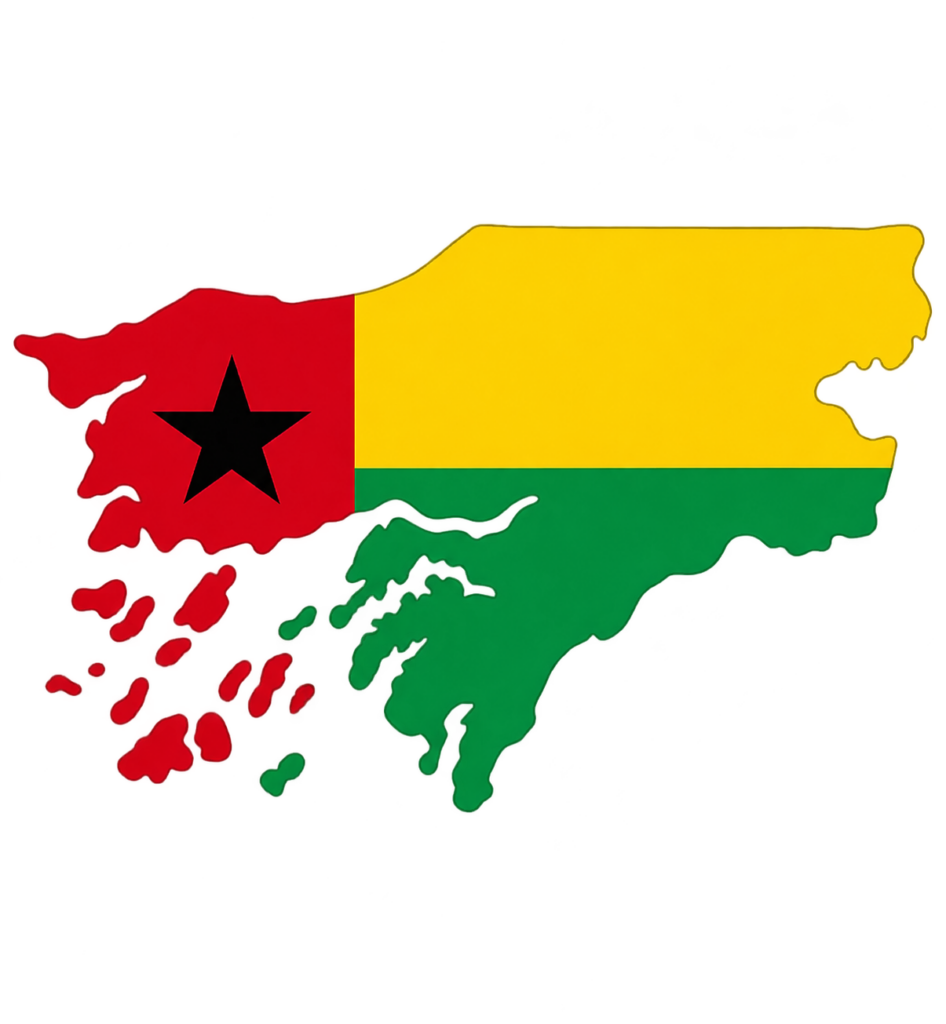
Political situation
In January 2012, the President of Guinea-Bissau, Malam Bacai Sanhá, died. This led to presidential elections in March 2012, in which the interim President, Raimundo Pereira, failed to obtain the majority required to avoid a second round. Guinea-Bissau suffered further political setbacks when the military staged a coup in April 2012, before the second round. The coup showed how precarious the country’s political situation is. ECOWAS decided to set up a military force (ECOMIB) and deployed 679 troops to restore peace and stability in the country. In addition, the ECOWAS Authority of Heads of State designated His Excellency Goodluck Jonathan, President of the Federal Republic of Nigeria, as Chair of the ECOWAS Contact Group on Guinea-Bissau.
It may be important to stress that the problem in Guinea-Bissau is political rather than a security issue as such. It is a manifestation of extreme poverty and State fragility, with some 30 political parties vying for power in a country of 1.4 million people. The sanctions imposed on Guinea-Bissau by the international community are starting to prove counterproductive, since nothing can be achieved without constructive engagement. The main political challenge in the country is to secure the adoption of the electoral roadmap.
Economic and financial situation
The exploitation of natural resources remains the main driver of the economy in Guinea-Bissau, which has considerable economic potential owing to its vast, largely untapped natural resources. However, the economy is not very diversified and depends heavily on cashew nuts, which accounted for 90% of exports in 2011.
Economic growth in 2011 was 5.1%, driven by exports, which contributed 14.4% of GDP. Forecasts show that demand for cashew nuts and prices fell from USD 1,350 per tonne to USD 1,130.6 in 2012 and USD 1,121.3 in 2013. Exports also fell from 14.4% of GDP in 2011 to 13.9% in 2012 and 13.7% in 2013, reducing their contribution to growth from 3.7% in 2011 to 0.1% in 2012 and 1.6% in 2013. Overall, economic growth was expected to rise from 4.6% in 2012 to 4.9% in 2013.
Guinea-Bissau’s financial sector remains underdeveloped. There are 4 deposit money banks with limited capital, accounting for more than 90% of the sector’s total assets, estimated at 11.2% of GDP in 2010. Remittances in 2012 amounted to USD 46 million, or around 4.7% of GDP.
Implementation of AML/CFT measures, including customer due diligence, remains very weak. However, the Doing Business 2012 report shows that the country moved up five (5) places compared with 2011, to 176th out of 183 countries, which represents great potential for growth in the financial sector. The private sector is dominated by informal trade, which is difficult to regulate and to protect from the laundering of criminal proceeds. Nevertheless, many reforms will need to be initiated to earn the confidence of the donor community and secure their investments.
Because of multiple obstacles, including political instability, Guinea-Bissau has a relatively high unemployment rate, estimated at more than 30% among young people. This unemployment results mainly from the lack of guidance for new graduates entering the labour market.
Apart from the impact of instability on production and investment, problems in the education system also contribute to depriving young people of their first job. There is therefore a need to create a national structure that identifies and helps unemployed people, so that a genuine assessment of the unemployment rate can be made and the problem tackled effectively.
Prevalence of predicate offences
The main sources of money laundering in Guinea-Bissau are drug trafficking, corruption and tax evasion. Smuggling and human trafficking, especially of children, are other threats and sources of illicit enrichment.
In addition, several drug cartels have made Guinea-Bissau a transit point for drug trafficking from Latin America to Europe because of the weakness of the country’s institutional and control structures. Guinea-Bissau is neither a producer nor a recognised consumer of illicit drugs; nevertheless, drug trafficking remains the greatest challenge. Several reports have denounced the close relationship between military leaders and drug traffickers. For example, the Chief of Staff is said to be the mastermind of the junta. He is suspected, together with a group of other individuals, of having taken control of the cocaine trafficking from Latin America that continues to pass through the country. Guinea-Bissau needs to take the necessary measures to restore political stability in the country in order to mitigate these threats to its strategic and economic development.
AML/CFT situation
There appears to have been no progress in Guinea-Bissau since the discussion of the third follow-up report in May 2012. For example, the President has still not approved the Law on Combating Terrorism and its Financing, the implementation of which will have an impact on Recommendations 3 to 6, 20 and 37. The main areas where progress has been made are the appointment and installation of the members of the CENTIF, the development of an STR template approved by the Minister of Finance and sent to all departments as required by law, and the adoption of the Uniform Law on Combating Money Laundering under National Assembly Resolution No. 4/2004 of 2 November, as well as the Law on Combating the Financing of Terrorism.
However, much remains to be done. For example, Guinea-Bissau has provided no information on when it will require the President’s approval of that legislation to be obtained. Moreover, the BCEAO has still not finished revising the Uniform Law on Combating Money Laundering. Overall, Guinea-Bissau’s fourth follow-up report failed to demonstrate the effectiveness of its AML/CFT system.
To remedy the deficiencies mentioned above, the Plenary proposed certain interventions and the implementation of enhanced procedures and monitoring of the country’s activities.
Technical assistance
The CENTIF of Guinea-Bissau was set up with the assistance of GIABA and UNODC. Other actions have been taken to improve the AML/CFT framework besides the enactment of laws. In terms of technical assistance, the needs expressed by Guinea-Bissau are primarily in the legislative and judicial areas. Greater awareness on the part of the country’s political authorities is in fact required, so that they give greater support to AML/CFT.
Strengthening investigative capacity is another major concern for the CENTIF authorities. To support skills transfer, training workshops for AML/CFT reporting entities are needed to ensure that they acquire the skills required to carry out their obligations conscientiously.
Political instability in Guinea-Bissau is a real burden on the economy. It also slows progress in many other areas. The country report presented to the 18th GIABA Plenary clearly explains the challenges this situation creates.
Conclusion
The ongoing general review of AML/CFT suggests that Guinea-Bissau has made no progress and that nothing has changed in the country’s AML/CFT situation since it submitted its third follow-up report in May 2012. Since cooperation partners provided the country with the means to rent offices, the State has not provided any support to the CENTIF. Although the designated members receive their salaries from their original employing organisations, more than four years have been spent trying to make the CENTIF truly effective, with a single STR (report of the 18th GIABA Plenary), which was handed over to the Ministry of Justice more than a year ago. To date, there is no information on what has happened to this STR. Concerned about the lack of political commitment and progress in addressing AML/CFT issues in Guinea-Bissau, the GIABA Plenary, at its 18th meeting in Dakar, Senegal, in November 2012, asked the Director General to send a high-level mission to the country, made up, if possible, of representatives of Member States.
Mutual evaluations
GIABA mutual evaluation reports on the anti-money laundering and counter-terrorist financing regime of Guinea-Bissau, together with the follow-up reports that measure its progress. Documents are listed by language of publication.
Mutual evaluation reports
Follow-up reports
Other documents
No document available in French at present.
Mutual evaluation reports
Follow-up reports
Other documents
No document available in English at present.
Mutual evaluation reports
Follow-up reports
Other documents
No document available in Portuguese at present.